Tuesday, January 08, 2013
Retirement Road Trip, Day 5 - Across Utah
Saturday, January 05, 2013
Retirement Road Trip, Days 3 & 4 - Into the West
Remember: Click on any photo to see it full screen.
Friday, January 04, 2013
Retirement Road Trip, Day 2 - Plan B
Total Miles Traveled: 625 (still!)
Our smooth getaway day wasn't quite as smooth as I let on in the last post. We hit a bumpy patch Wednesday evening. Abdominal pain (Marc), emergency room, diagnosis of diverticulitis (mild), two nights in the Great Plains Regional Medical Center in North Platte.
The worst of it was that the doctor managed to forget about me Thursday morning, costing us the day. Four fantastic nurses - Dani, Alexis, Rochelle and Hilary - solved the problem and got us on our way. 'Nuff said.
Thursday, January 03, 2013
Retirement Road Trip!
Four decades later, we’re setting out again on a new adventure – Retirement Road Trip. California is again the goal, where San Luis Obispo will be our home for the month of January. This time, we're chasing the sun, seeking someplace where it has some heat.
Day One was, in a word, uneventful - all you want to say about a day of travel. We had good weather. We arrived in North Platte, Nebraska, ahead of schedule, took a walk, settled in. 'Nuff said.
Remember: You can click on any photo to see it full screen.
| Buffalo! (Carol says they're just cows.) |
Wednesday, March 21, 2012
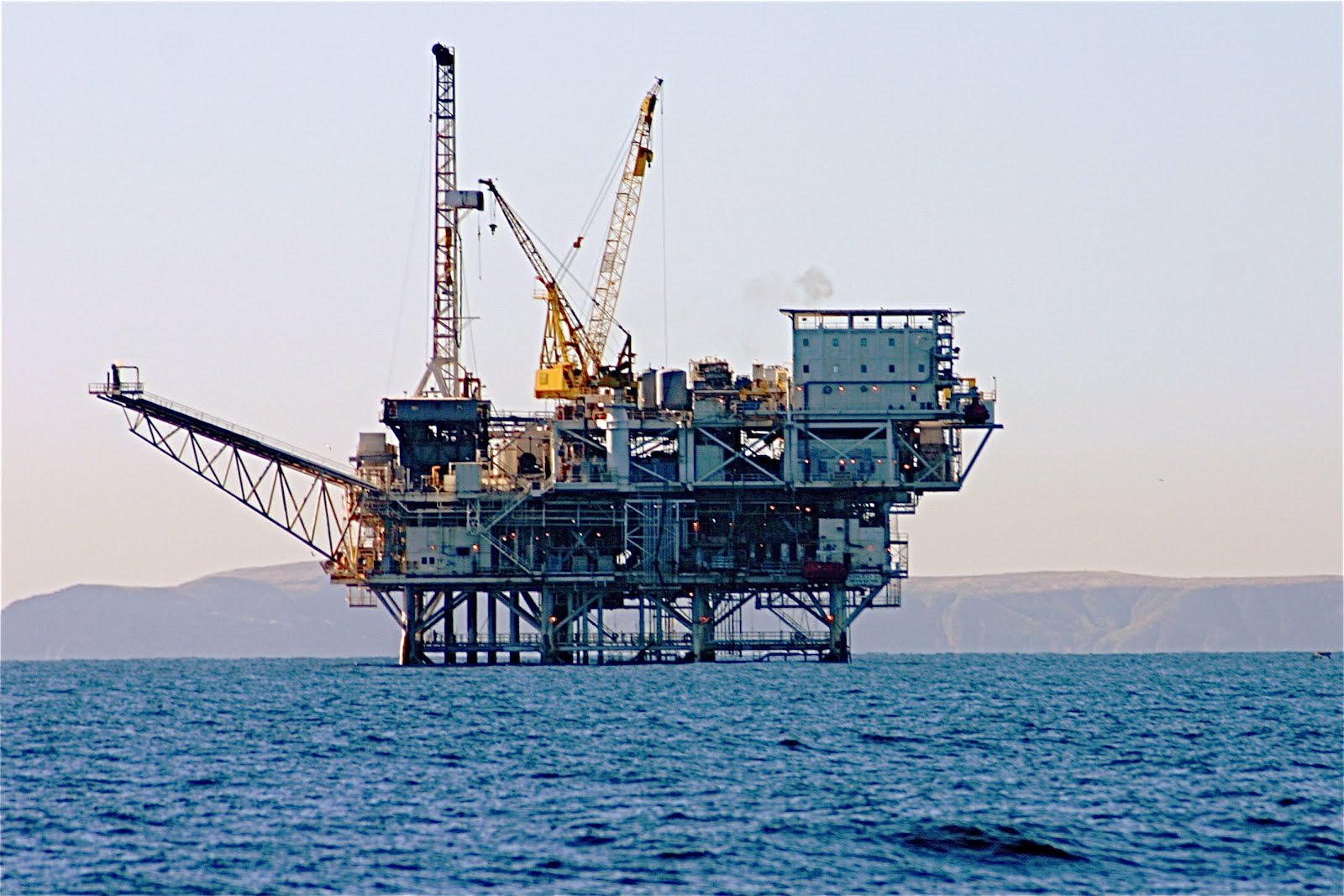
Channel Islands National Park - Water Everywhere...
As idle as a painted ship
Upon a painted ocean.
Water, water, everywhere,
And all the boards did shrink;
Water, water, everywhere,
Nor any drop to drink."
I had plenty of water, plus a quart of Snapple and my lunch, when I boarded the boat for the twelve-mile voyage to Scorpion Canyon harbor on Santa Cruz Island, the largest of the Channel Islands. I shared a bench on the ride with Tina Armbruster, an enthusiastic volunteer docent. She shared her National Geographic map of the islands and gave me a thorough briefing of the hiking trails. When we tied up to the dock, I was ready to go.
The captain, as knowledgeable about tourists as he is about the ocean and the islands, told us passengers in approximately a dozen different ways that the boat back to the mainland would leave promptly at 3:30, half past three, thirty minutes after three, when the big hand is on the six and the little hand on the three. Then he repeated himself. Twice.
I made it into town Monday afternoon and, after a bit of a hassle, pitched my tent in Faria County Park. It's taken me a long time, but I'm finally camping on a beach!
A little farther on, I found an intersecting trail that led out of the canyon to Cavern Cove, which the trail guide noted had views "not to be missed." It was another two miles, but I felt great and had lots of time. I was rewarded with more magnificent views once I finished the steep climb out of the canyon. I had a leisurely lunch, chatting with other tourists. They drifted away, and I had the spot to myself. So I lay in the warm sun and drifted off as I thought of the sights, sounds and smells of this trip.
P.S.
Tuesday, March 20, 2012
Death Valley's Harsh Grandeur
Turn right in Olancha onto US 190, and things really begin to get desolate. It's still a hundred miles to Death Valley, but as mile after mile of pavement pass under you, you wonder how much more bleak the terrain can be.
The rental Volkswagen climbed to the top of a four thousand foot mountain. A vast, barren valley lay below. The map revealed this to be Death Valley's next door neighbor. Another climb to four thousand feet revealed a new expanse of nothing, with gray mountains in the distance. This was Death Valley. Other than the highway that I drove on, and an occasional car, I had seen no indication of human habitation in fifty miles - not a house, not a barn or even a shack, not a telephone pole.
I made it to Furnace Creek, the hub of activity in Death Valley, and found a campsite. The helpful ranger told me I could camp up high on the hill, but strong winds were expected over the next two days. Down low, nestled in a small canyon that possessed actual shrubs that offered a bit of ambience, I'd find protection from the wind. It was, he informed me, also preferred by the sidewinder rattlesnake. Huh. I chose rattlesnake ravine.
I never saw a serpent during my stay, but I learned that the ravine did serve as a very efficient channel for the tremendous winds that arrived on schedule. The winds blew all night, bending tent poles and playing the tent nylon like a hard rock guitar player on drugs. I finally took down the tent, piled rocks on it and spent the remainder of the night (and the entire second night) in the car.
How windy was it? My pots, lids and utensils, carefully weighted with rocks before I went to bed, were gone in the morning. I scoured the campground and managed to find one pot, both lids and my spoon.
How windy was it? When I visited the salt flats of Bad Water, wind gusts at one point made it impossible for me to walk forward.
Bad Water is easily accessible to tour buses and would be crowded if it weren't so vast. So it wasn't my favorite place in Death Valley, but still it was awesome.
I found many good hikes. On my first venture after setting up camp, I tried hiking up to Zabriskie Point through the badlands below it. The trail got a bit too narrow and the drop-offs a bit too dramatic for my liking, so I settled for a sunrise drive to take in the wonder of the place.
I met the ranger, Bob Greenberg, a few minutes early. We had a sunny, cloudless sky overhead, and a distant storm provided a rainbow for our first photo op. It turned out that I was the only person to show up for the walk, so I ended up with a ninety-minute private tutorial on photography and the desert. Bob and I got along well. I learned some good things from him, and we traded stories and experiences with enthusiasm. He is a seventy-year old guy who looks fifty. He was a professional photographer all his life before selling his business and becoming a Park Service ranger. Now he spends his life moving around national parks from Denali to the Everglades. He returns every year to Death Valley.
When it comes time gas up the car, Death Valley isn't where you want to be. The prices hovered close to six dollars a gallon. As I was ready to drain my wallet, I joked with a man walking by that the price had dropped a penny overnight to $5.95. He said that over the mountains in Beatty, Nevada, thirty miles away, gas was $3.75. Five minutes later, I was on the road. What the heck. It was a pretty drive, and I had nothing but time. I saved a bundle on gas, ice and other supplies.
On Sunday, I was up very early for another trip to the dunes. I wanted to photograph them in the early morning light. I spent a couple hours wandering the vastness, up and down giant, shifting hills. When I had finally satisfied myself, I headed back to the car and found a ranger preparing to give a talk on wildlife in the dunes. This time there was a crowd - a young German PhD student and myself. After forty-five minutes, the dunes had morphed from a barren and lifeless place to a teeming habitat. The ranger showed us how to spot tracks of countless critters - mice, snakes, birds, lizards, coyotes and fox.
I woke up on the third morning, not knowing where I'd be at lunchtime. I did my photo trip to Zabriskie Point, ate a quick breakfast and broke camp. At nine, I called Island Packers, the boat concession for the Channel Islands National Park, to see if there were any day trips with openings available. Yes, I was told. Tomorrow at nine a.m., a boat was going to Santa Cruz Island. Yes. There are places available. Out came my credit card, and my plans for the next couple of days were made. I was on the road by nine-thirty to my next adventure.
Thursday, March 15, 2012
Cambria - Using All Five Senses
(Remember: you can click on any photo to see it full screen.)
On Wednesday, we drove from our cottage on a hill overlooking the Pacific in Cambria to Montana de Oro State Park. On a guided nature walk, our docent, Randy, urged us to use all five senses when experiencing Mother Nature. A good reminder, but not one that we needed. The aroma of flowers followed us on our walks in San Luis Obispo. The smell of salt water never fails to tingle. In an open field, Randy asked us if we smelled breakfast. With a little prompting, we did! Maple syrup! I don't remember which plant was the instigator, but the smell was distinct.
Later, we picked sprigs of "cowboy sage" and rubbed it between our fingers to release its fragrance. Cowboys of yesteryear came into town for a break from their labors, smelling of livestock, sweat, dirt, campfire and who-knows-what-else. The cowboy sage plant made them more presentable to the women whose company they were eager to gain.
Among the sights, Randy pointed out two rattlesnakes, sleeping amid the scrub plants - an interesting visual sensation. We avoided employing our sense of touch.
The sights and sounds of the coast and the forest thrust themselves dramatically before us, but it's the things we can smell and touch and taste that give experiences a true fullness.
Randy was full of information that he was glad to impart. I thanked him at the end of our walk for giving me so much to forget by dinner time.
As far as taste goes, that night we dined at Robin's in Cambria - crab enchiladas accompanied by a chilled Conundrum. (That's not a problem at all; it's a delicious, fruity,northern California white wine.)
We packed a lot into our time in Cambria - a visit to the elephant seals, a tour of the lighthouse at Piedras Blancas, a drive up Route 1 to Ragged Point, where the dramatic coastline of Big Sur begins, and some hiking whenever we could.
At Piedras Blancas, our guide, Abel, talking about the coastal fogs, mentioned the '80's movie, "The Fog." It was filmed in Point Reyes and had some notables in the case - Janet Leigh, Hal Holbrook, Jamie Lee Curtis. So that night, Carol and I watched it on Netflix. Grade B all the way. Try as they might, this horror film failed to horrify.
The daddy elephant seals are long gone, except for a couple stragglers. The beach still was home for tired mothers, resting before their return to the sea, and about 4,000 pups. A docent informed us that the elephant seals are doing well, with large and growing numbers of births every year. The pups are growing large, and are developed enough now that they are taking to the shallows to play, fight, practice being adult elephant seals and learn to swim.
Today we said goodbye to Cambria and took a leisurely drive down the coast to get Carol to her flight back home. We stopped in Pismo Beach, where we were served some top-rate orange freezes, made from scratch before our eyes. Pismo Beach, we agreed, merits a return visit.
Carol's home now, and I'm on my way to Death Valley. If I can find a lodge with wi-fi, maybe you'll get a report and photos in the next several days. Keep trying. In the meantime, enjoy the photos.
Tuesday, March 13, 2012
San Luis Obispo, Spring Break, 2012
In the Middle of Somewhere
I am pleased to introduce my first guest blogger, Carol, my wife, best friend and constant travel companion.
San Francisco – 250 miles
Los Angeles – 200 Miles
San Luis Obispo , a town of 44,000 residents located inland seven miles from the Pacific Ocean, is featured in Dan Buettner’s “Thrive” as one of the happiest places to live. What makes all these people so happy? I set out to find out.
Remember: You can click on any photo to see it full screen.
We caught the happy mood of San Luis Obispo early in our stay.
After a flight to Santa Barbara and a 90 minute drive up highway 101, my husband and I comfortably settled into a house in the historic Mill Street district , available through AirB&B. We had a first floor bedroom and bath and the use of the kitchen, living room and dining room. We were a short walk to downtown SLO. Off to explore the possibilities!
Dining Recommended were Buona Tavola, Luna Red, Big Sky Café and Novo. We chose Novo because it had patio dining that overlooked the creek and looked across at the Mission (of St. Louis Obispo) and the Museum of Art. And patio heaters for when the sun went down.
Shopping It was Friday night and the streets were bustling with activity. The usual mall destinations – Gap, Express, Victoria’s Secret, Abercrombie & Fitch were complemented by local shops and galleries. Young and old alike strolling the avenues.
Movies There are 3 cinemas in downtown and we arrived in the middle of the International Film Festival.
On the walk back we discovered we were a few blocks away from a supermarket and drug store. We stocked up on eggs, bacon, fruit, yogurt and Haagen-Daaz ice cream. We were happy.
The next day dawned sunny and warm, so we headed out for some exercise.
Hiking There are several areas for hiking right around town. There is a list on the city map that details length of time and difficulty level. Bishop’s Peak at 2 hours time and strenuous sounded like a challenge. Just past Foothills Boulevard on Santa Rosa (Route 1) , turn into the Highlands subdivision and head back to the trailhead. By the time we got up and back down, the hills were alive with hikers – from grandpas and grandmas to young couples toting toddlers to teens and college students. And it was strenuous, so these happy people must be in good shape.
As we left, we noticed that the campus of Cal Polytechnic was just across the highway, so we grabbed a sandwich at a student café and pondered our next adventure.
On the trail to the summit of Bishop Peak
Biking Of the five bicycle shops in town, Wally’s on Higuera near South Street was most likely to have bikes for daily rental. For $25 you get the bike, helmet, lock and a great map of all the cycling routes in the greater SLO area. This is a bicycle town – the routes go everywhere. We went to Avila Beach – a 16-mile roundtrip. Some of the route was on a frontage road next to busy 101 and some on a dedicated multi-use trail.
Beaches Avila Beach is the closest shore town to San Luis Obispo. Other options are Pismo Beach, Morro Bay, Cayucos and Cambria.
We cleaned up and walked back into downtown for dinner and a movie, feeling healthy and happy.
Just like Camelot, the rain held off until Saturday night. So Sunday started out cool and gray. Time for a coffee and the New York Times. On the south end of town, on Tank Farm Road near Higuera, there was a small farmer’s market selling local produce. There was also a Trader Joe’s for the rest of our grocery needs. What else do you need?
Wineries The Central Coast region is famous for its multitude of vineyards, so we visited a few tasting rooms. Just a few miles south of the city you can visit a dozen or so. We were lured in by a few. The major grapes are chardonnay and pinot noir. We also tasted grenache and syrah and riesling. The countryside is beautiful down here – you don’t even need wine to enjoy the views.
San Luis Obispo is nestled in the Central Coast wine country.
Art Our day was slipping away fast, we just had time to get a nice lunch at Big Sky and visit the Museum of Art. The current exhibits at the museum featured photographs of icons and legends by Michael Childers and unique Circus dioramas by Kathy de Palma.
A short stay but impressive in the amount of activities available. The most impressive feature? It could be the people…. They were so nice to us. Friendly. Helpful. And happy.